
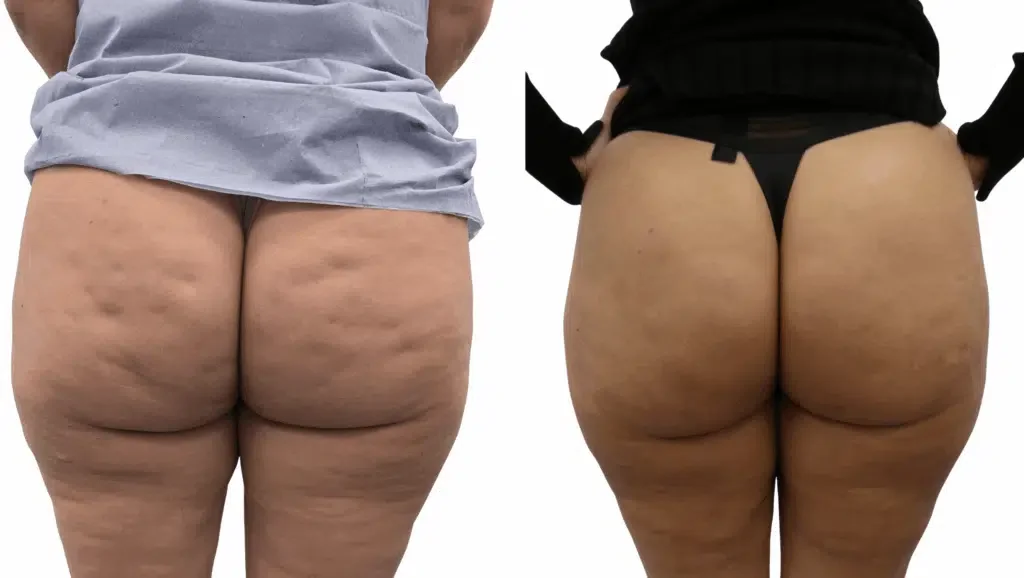
Cellulite is a nearly universal experience for women after puberty, yet it remains one of the most misunderstood concerns in aesthetics. Despite countless promises from creams and machines, the question persists: Can science actually smooth away cellulite, or are we chasing an unattainable ideal?
Understanding Cellulite: Origins and Causes
Under the surface, cellulite is not just a matter of excess fat. At its core, cellulite is a structural issue involving connective tissue bands (fascia) weaving through pockets of fat. These bands pull down on the skin, creating that characteristic dimpled appearance.
Fitness, thinness, or rigorous routines are not reliable shields. Even very fit individuals can experience cellulite, which highlights that this is not simply a weight problem but a physiological one shaped by several factors. Genetics leads the pack, setting the foundation for who is more likely to develop cellulite and how severe it will be. Hormones, especially estrogen, also influence its development, alongside diet and lifestyle choices, which can modify its appearance but not necessarily its presence.
Historical and Traditional Approaches to Cellulite Treatment
For decades, the fight against cellulite has included a parade of topical products, diets, and massage therapies, each promising smoother skin but frequently underdelivering. Early interventions ranged from dry brushing and caffeine creams to deep tissue massage, yet results were typically modest and temporary.
While improved nutrition and regular exercise can benefit overall skin tone and health, they rarely erase cellulite. The connective tissue bands beneath the skin remain unaffected by fat loss alone.
Emergence of Injectable Treatments for Cellulite
The cosmetic landscape shifted with the introduction of biostimulant injectables like Sculptra® and Radiesse®. Unlike surface treatments, these injectables target the skin’s deeper support system. Sculptra®, for example, uses poly-L-lactic acid (PLLA) particles to gradually stimulate the production of collagen, a critical component for firmer, thicker skin. Radiesse® acts similarly, redensifying the skin to reduce visible dimpling.
Treatment protocols usually involve three to four sessions, spaced six to eight weeks apart. The process is gradual, with the most noticeable improvements emerging over several months as collagen rebuilds beneath the surface.
Complementary Technologies Enhancing Cellulite Treatment
Injectables alone can help, but combining them with technology-based interventions often yields the best outcomes. Devices that use radiofrequency or Erbium lasers work by heating the tissue, which stimulates further collagen remodeling and improves skin elasticity.
When these treatments are used together, the effects are amplified. Radiofrequency addresses collagen on a superficial level, while injectables work deeper, producing a multi-layered impact on skin texture and firmness.
Evaluating the Effectiveness of Cellulite Injections
Clinical experiences and patient testimonials suggest that injectables can significantly improve the appearance of cellulite, especially when part of a combined treatment plan. However, there are important limitations.
First, there is no permanent fix for cellulite. As connective tissues regenerate and genetic or hormonal factors persist, the skin may develop new dimples even as older ones fade. Results typically last one to two years before maintenance sessions are necessary. Severity of cellulite, individual biology, and consistency with follow-up appointments all play roles in determining how dramatic and long-lasting the results will be.
Those interested in exploring advanced options will find that cellulite injections from Clinique Anti Aging offer a scientifically grounded approach, leveraging the latest advances in biostimulant injectables and combination therapies.
The Future of Cellulite Treatment: Innovations and Trends
As research continues, the frontier of cellulite treatment is expanding. New injectable formulations and improved delivery methods are on the horizon, promising better outcomes and fewer sessions. Genetic and hormonal research holds intriguing possibilities, such as identifying markers for increased risk or even developing preventative therapies.
Personalized treatment strategies are becoming the norm, with bespoke plans that combine injectables, technology, and lifestyle guidance for optimal and sustained improvement. While cellulite itself may not be entirely eliminated, the future points toward more effective management and longer-lasting confidence for those seeking smoother skin.
Ultimately, the journey to smoother skin is less about perfection and more about progress, combining realistic expectations with proven, science-backed solutions.