

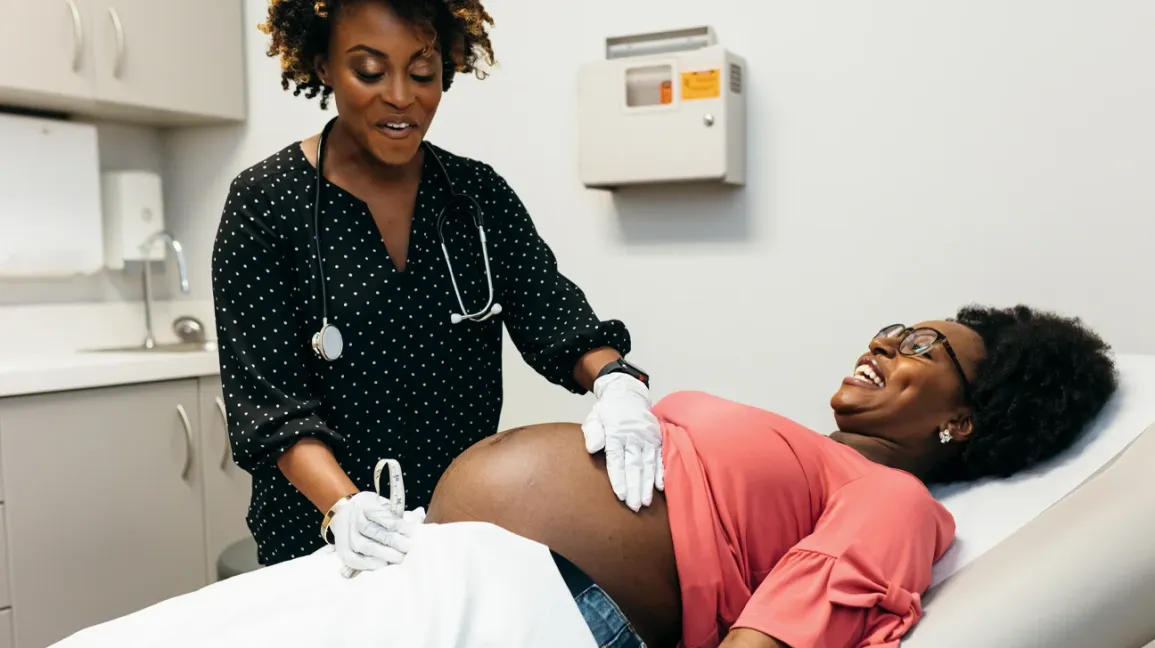
Searching for an obgyn for pregnancy near me is often one of the first practical steps after a positive pregnancy test. The right OB-GYN can guide prenatal testing, monitor your health and the baby’s development, answer questions, and coordinate labor and delivery. The best choice is not always the closest office. Insurance coverage, hospital affiliation, pregnancy risk, communication style, appointment access, and the practice’s delivery model can matter just as much as distance.
When Should You Book Your First Prenatal Appointment?
ACOG recommends starting prenatal care in the first trimester, ideally before about 10 weeks after the first day of your last menstrual period when possible. ACOG’s prenatal care guidance also notes that visit schedules can be tailored to the person’s medical needs, pregnancy risk, preferences, and access to care.
Call earlier if you have significant bleeding, severe pain, a history of ectopic pregnancy, major medical conditions, prior pregnancy complications, or another reason your pregnancy may need closer monitoring.
What Should You Compare Before Choosing an OB-GYN?
| What to check | Why it matters | Question to ask |
| Insurance and costs | Prenatal visits, testing, hospital care, and delivery can involve different bills | Are you and the delivery hospital in my insurance network? |
| Hospital affiliation | Your OB-GYN may deliver only at certain hospitals or birth centers | Where do your patients usually deliver? |
| Delivery coverage | Some practices rotate doctors for labor and delivery | Will my own doctor deliver the baby or whoever is on call? |
| Pregnancy risk | High-risk pregnancies may need maternal-fetal medicine support | How do you coordinate care if complications develop? |
| Appointments | Pregnancy involves repeat visits and time-sensitive testing | How quickly can I get an urgent appointment or nurse call-back? |
| Communication | Comfort asking questions matters throughout pregnancy | How are after-hours questions handled? |
Should You Check Board Certification?
Board certification is voluntary, but it can be one useful credential when comparing physicians. The American Board of Obstetrics and Gynecology verification tool lets patients confirm whether an OB-GYN currently holds ABOG certification. Certification should be considered together with state licensure, hospital privileges, experience, communication, and the type of pregnancy care you need.
What Happens at the First Prenatal Visit?
The first appointment is usually more detailed than a routine visit. Your OB-GYN may review the first day of your last period, past pregnancies, medical and family history, medications and supplements, surgeries, vaccinations, and previous pregnancy complications. Blood pressure, weight, blood and urine testing, and other screening may also be recommended depending on your stage of pregnancy and medical history.
Bring a list of medicines and supplements, your insurance information, and any questions you want answered. If you have records from fertility treatment, previous pregnancies, or another doctor, ask whether the new practice needs copies.
When Might You Need a Maternal-Fetal Medicine Specialist?
A maternal-fetal medicine specialist, or MFM, is an OB-GYN with additional training in high-risk pregnancy. You may be referred if you have certain chronic conditions, serious complications in a previous pregnancy, multiple pregnancy, fetal concerns, or complications that develop during the current pregnancy. Seeing an MFM does not always mean you stop seeing your regular OB-GYN. The two may share your care.
Frequently Asked Questions
Can I change OB-GYNs during pregnancy?
Yes. People change practices because of insurance, relocation, communication concerns, hospital preference, or changes in pregnancy risk. Ask the new office how records will be transferred.
Do I need an OB-GYN if my pregnancy is low risk?
Not always. ACOG notes that certified nurse-midwives and some family medicine physicians also provide prenatal care for average-risk pregnancies. Make sure the provider can coordinate delivery and transfer care if complications occur.
How close should my OB-GYN be to my home?
Convenience matters because prenatal care involves repeated visits, but hospital location, quality of care, insurance, and availability can matter more than choosing the nearest office.
What should I ask about delivery?
Ask where the practice delivers, who covers labor and delivery after hours, how emergency calls are handled, and how the team coordinates with the hospital.
What if no nearby OB-GYN is accepting new patients?
Call your insurance plan, local hospital maternity department, community health center, or primary care office for in-network options. Starting prenatal care early is more important than finding a perfect provider immediately.
Bottom Line
When searching for an OBGYN for pregnancy near me, compare more than distance. Look at insurance participation, hospital affiliation, delivery coverage, appointment access, credentials, communication style, and the practice’s ability to manage your pregnancy risk. Start prenatal care early, keep your medical information organized, and choose a team you feel comfortable contacting when questions or new symptoms arise.
Sources: ACOG Prenatal Care | ABOG Certification Verification.